

Key insights from the panel discussion titled ‘Building a Resilient Organization: Integrating Strategy, Risk Management, and Crisis Leadership’ at the G[P]RC Summit 2026 in Dubai, August 26–27, 2026.
Introduction
Organizational resilience goes beyond having established risk management frameworks, business continuity plans, and crisis management procedures. It requires organizations to connect these capabilities, integrate risk into strategic decision-making, and ensure that every function understands its role in responding to disruptions.
At the G[P]RC Summit 2026 in Dubai, a panel of industry experts explored the challenges organizations face in building resilience and the need to move towards a more integrated approach. The discussion covered the readiness gap between having frameworks and being prepared for actual disruptions, the relationship between risk and strategy, the role of integrated GPRC, and how organizations can measure and strengthen their resilience maturity. It also examined how technology, data, and artificial intelligence can help organizations gain the context needed to make informed decisions.
Bridging the Gap Between Risk Management and Crisis Management
Many organizations have well-established frameworks for risk management, business continuity, and crisis management. Yet, when disruptions occur, they often find themselves inadequately prepared to respond. One of the underlying reasons is that these capabilities frequently operate in silos.
Different divisions within an organization may have their own crisis management capabilities, but these need to work together as part of a coordinated response. Risk signals must be effectively communicated to business continuity and crisis management teams so that potential threats can be identified and addressed before they escalate.
The effectiveness of an organization’s crisis response does not depend solely on the individual strengths of its departments, but also on how well they are interconnected. For instance, while the risk management team may identify a potential threat and initiate action, the business continuity team may already have the capabilities required to respond. When these functions operate independently, the effectiveness of the overall response can be compromised.
Organizations therefore need to assess whether their teams are collaborating or operating independently. Building stronger connections between risk management, business continuity, and crisis management is essential to ensuring that established plans translate into effective action when disruptions arise.
Making Risk Management an Integral Part of Strategy
Traditionally, risk management has been approached as an exercise that takes place after an organization’s strategy has been developed or selected. An emerging perspective, however, positions risk management as an active contributor to strategy development and decision-making.
This shift is becoming increasingly important as organizations navigate rapidly emerging crises, interconnected risks, and an unpredictable business environment. Relying solely on traditional risk management practices can limit an organization’s ability to anticipate uncertainty, respond to emerging challenges, and achieve its strategic objectives.
For risk management to become an integral part of strategy, organizations must move away from the idea that risk management professionals alone own organizational risks. Risks are owned across every function and at every level of the organization. The responsibility of risk management professionals is to ensure that risks are consistently discussed in boardrooms, committee meetings, and senior management discussions, and that they are considered whenever significant organizational decisions are made.
It is equally important to recognize that risks are not inherently negative. They can also represent opportunities that organizations need to understand and pursue to achieve their objectives. An excessive focus on risk avoidance can prevent organizations from progressing, innovating, and responding effectively to changing business conditions.
“An excessive focus on risk avoidance can prevent organizations from progressing, innovating, and responding effectively to changing business conditions.”
Another important aspect of this shift is integrated assurance. Senior stakeholders need a comprehensive view of organizational risk rather than fragmented perspectives from individual functions. This does not necessarily mean producing a single assurance report. Instead, it requires aligning messaging, terminology, and insights across the organization. Boards cannot make effective decisions based on several disconnected reports; they need a cohesive understanding of the risks affecting the organization.
Ultimately, organizational maturity is not determined by the existence of risk registers or documented frameworks alone. It is reflected in how effectively these tools inform and influence critical business decisions. Continuous improvement, collaboration, and professional development are essential to making this possible.
Connecting Strategy, Objectives, Risk, and Performance Through GPRC
As risk becomes an integral part of strategy, it must also be connected to organizational objectives, performance, and business outcomes. This is where an integrated Governance, Performance, Risk, and Compliance (GPRC) approach becomes important.
Today’s business landscape is shaped by geopolitical challenges, interconnected risks, and evolving regulatory requirements. Addressing these complexities requires more than managing individual functions independently. Organizations need a connected approach that brings together strategy, objectives, risk, performance, and leadership decision-making.
In many organizations, these areas are still addressed in separate forums. Risks are evaluated in risk management meetings, performance is reviewed in a different strategic context, and leadership decisions often intersect with both. Without a unified perspective, it becomes difficult to understand how risks influence performance and whether the organization is taking the right risks to achieve its objectives.
“Without a unified perspective, it becomes difficult to understand how risks influence performance and whether the organization is taking the right risks to achieve its objectives.”
An integrated approach helps organizations answer two fundamental questions: Are they taking the right risks to achieve their strategic objectives? And are those risks within the organization’s defined risk appetite?
The importance of this interconnected perspective is also evident in operational resilience. The UK’s operational resilience framework offers valuable insights into how organizations can approach resilience by starting with the products and services they deliver.
From there, organizations need to understand the dependencies that support these products and services, including technology, facilities, systems, third-party relationships, and personnel. These dependencies must also be connected to the organization’s strategic objectives and initiatives.
“Organizations need to understand the dependencies that support these products and services, including technology, facilities, systems, third-party relationships, and personnel.”
Establishing this interconnected model enables organizations to assess the vulnerabilities and recoverability of the internal and external factors that influence their products and services. It also provides a clearer understanding of how disruptions could affect critical business services and, ultimately, organizational objectives.
Measuring Resilience Maturity: Metrics and Evaluations
Measuring resilience maturity begins with understanding the business impact of potential disruptions. This includes evaluating third-party risks and dependencies, identifying how long the organization can continue operating without critical external services, and determining what alternative operating models can be adopted during disruptions.
Identifying the critical business services that need to be maintained, even under adverse conditions, is equally important. These assessments help organizations understand their ability to sustain operations and provide a practical basis for measuring resilience.
Importantly, resilience is fundamentally a business consideration, not merely a technical one. Technology must support business requirements, and its effectiveness needs to be evaluated in relation to those requirements. This includes measuring vulnerabilities, recoverability, third-party dependencies, and concentration risks associated with service providers.
Resilience maturity also depends on shared ownership across the organization. It cannot remain the responsibility of only the business continuity or risk management teams. Every function needs to understand its role in maintaining resilience.
For example, assurance teams need to understand the relevant ethical considerations and control measures, while technology teams must understand how their systems and capabilities support resilience objectives. When these responsibilities are understood across the organization, and resilience becomes a regular topic of discussion at board and committee levels, it indicates a more mature approach.
Another important aspect is the ability to quantify resilience through clearly defined resilience indicators. Organizations need to establish indicators that reflect their resilience capabilities and align with strategic goals. These indicators should be supported by measurable assessments of vulnerability, recoverability, and business impact.
However, defining indicators and documenting plans are not sufficient on their own. Organizations must test their capabilities through scenario analysis, simulations, and practical exercises. These assessments help identify gaps that may not be visible in documented plans and highlight areas requiring improvement.
A gap in one critical area does not necessarily mean that the entire organization lacks resilience. Rather, testing helps pinpoint specific vulnerabilities and enables organizations to develop targeted action plans to address them.
Strengthening Resilience Through Proactive Risk Management
Strengthening organizational resilience requires a shift from reacting to disruptions towards anticipating and preparing for potential challenges.
One way to approach this is through horizon scanning, which helps organizations consider risks across different timeframes:
- Horizon 1: Anticipated risks and events within the next two years.
- Horizon 2: Emerging developments and potential risks over the next two to five years.
- Horizon 3: Longer-term risks and uncertainties that may emerge beyond five years, depending on the organization’s context.
While it is impossible to predict every potential scenario, horizon scanning enables organizations to make informed assumptions, identify emerging threats, and develop the capabilities needed to respond.
Strengthening the security posture is another fundamental aspect of resilience. Effective telemetry systems, continuous monitoring, and robust threat detection and response capabilities help organizations identify potential threats and respond consistently to attacks. This requires an ongoing commitment to detection, response, and continuous improvement rather than relying solely on periodic assessments.
More broadly, organizations need to embrace risk rather than fear it. They cannot anticipate or eliminate every possible risk, but they can build the capabilities to adapt and evolve as circumstances change. Risk management should therefore move beyond a reactive approach towards one that protects business operations while enabling organizations to pursue opportunities.
A practical starting point is to eliminate assumptions by connecting risks to mission-critical objectives. This helps organizations understand which risks matter most, where their vulnerabilities lie, and what capabilities need to be strengthened to support their strategic priorities.
Risk appetite is almost universally defined at the board level and universally ignored at the operational level.
Using Data, AI, and Digital Twins to Improve Decision-Making
Organizations today have access to vast amounts of data but often struggle to translate it into meaningful insights and informed decisions. One area where this challenge becomes particularly evident is the operationalization of risk appetite.
Risk appetite is almost universally defined at the board level and universally ignored at the operational level. This creates a disconnect between what executives understand as the organization’s acceptable level of risk and how that understanding is applied across the business.
Rather than treating risk appetite as an annual governance exercise, organizations need to move towards a continuous, real-time assessment of their risk exposure in relation to their objectives.
Achieving this requires better information, meaningful insights, and the ability to interpret signals within the right business context. A key step towards improving decision-making is eliminating assumptions. Organizations need to gather relevant data and signals, but collecting information alone is not enough. The information must be interpreted in the context of the organization’s structure, processes, objectives, and dependencies.
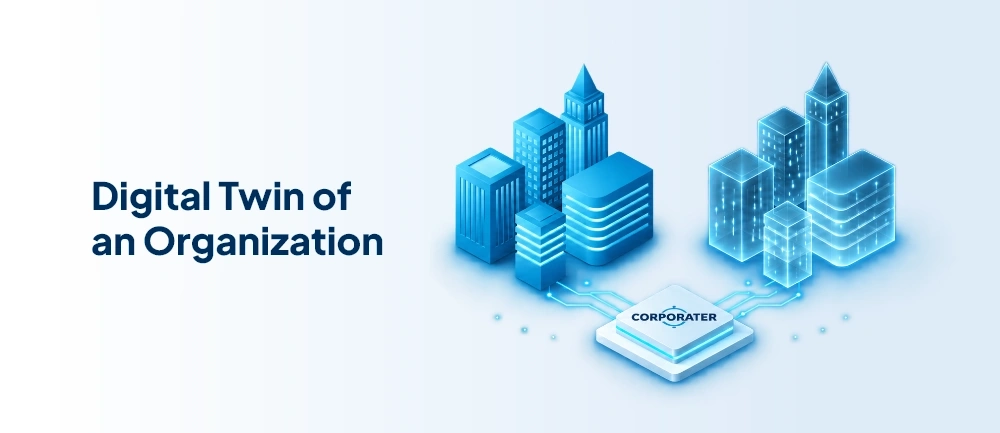
This is where the concept of the Digital Twin of the Organization becomes relevant.
Corporater offers a Digital Twin of Your Organization, a dynamic software model that provides a digital representation of the organization. By bringing together information and signals from different sources, this model establishes the business context needed to derive meaningful insights and support better decision-making.
With this context, organizations can move beyond isolated data points and understand how different elements of the business are interconnected. This provides a stronger foundation for identifying priorities, understanding risk exposure, operationalizing risk appetite, and making informed decisions.
Conclusion: Resilience Through Integration and Shared Ownership
Building organizational resilience is not about accumulating more frameworks, dashboards, risk registers, or reports. It is about ensuring that the capabilities, information, and people behind them work together to support informed decisions and effective responses to disruption.
The discussions at the G[P]RC Summit 2026 highlighted the importance of moving beyond siloed risk management and towards an integrated approach that connects governance, strategy, objectives, performance, and risk. This requires risk to become part of everyday business decision-making, with shared ownership across functions and clear accountability at every level of the organization.
Organizations also need to look beyond documented plans and assess whether their resilience capabilities can withstand real-world challenges. This means understanding critical business services and their dependencies, defining measurable resilience indicators, testing capabilities through practical exercises, and continuously improving based on identified gaps.
Technology, advanced data models, and AI can further strengthen this approach by connecting information across the organization and providing the context needed to identify vulnerabilities, assess risk exposure, and make better decisions.
Ultimately, a resilient organization is one that understands its dependencies, anticipates emerging challenges, and can adapt without losing sight of its strategic objectives. By connecting people, processes, data, and technology through an integrated GPRC approach, organizations can move from fragmented oversight to a more coordinated, proactive, and sustainable model of resilience.